













Source: KLa Systems
 Engineers designing wastewater treatment systems for municipal and industrial applications are familiar with the importance of the alpha factor. The alpha factor is calculated by taking the overall mass coefficient (KLa) of dirty water and dividing it by the KLa of clean water. This is one of the most important considerations when determining the size of an aeration system and can have major implications on the capital and operating cost of the aeration system.
There are many things that can affect the alpha factor of a wastewater treatment system. Even the most careful engineer can overlook something that can impede oxygen transfer. This can include substances used during production, maintenance, and other stages of wastewater treatment. Failing to take these factors into account can cause the treatment systems to underperform, which can result in unexpected costs in the form of excess energy use and possible system upgrades.
Foam Alone
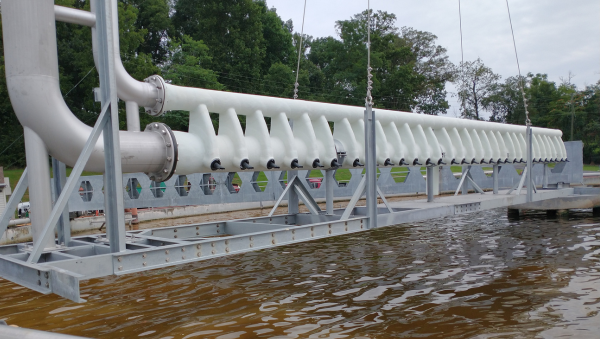
Some years ago, a food processing company installed a slot injector system in a 1.8 million gallon, 28’ deep aeration tank. They intended the system to be extremely energy efficient. The customer purchased one slot injector aeration manifold with 80 injectors, one 125-hp jet pump, and four 125-hp blowers, one of which was a spare and two were in anticipation of future growth. However, only a few months after installation, the operators were running three of the blowers and, at times, all four blowers. This is despite the fact that the loading rates were just a fraction of what the system was originally designed for.
Looking at the surface pattern, the bubbles being produced were far too large. Even worse, the biology looked far too dark, indicating a low dissolved oxygen content and the MLSS (mixed liquor suspended solids) had an oily sheen. Upon performing onsite oxygen uptake tests, it was clear the aeration system should have been running one blower to meet the oxygen demand.
Given the size of the bubbles, the most likely culprit was an anti-foaming agent (Figure 1). After determining that the plant operators were not using this chemical to fight excess foam in the aeration tank, we needed to look at upstream processes. It turns out, the production process uses anti-foaming chemicals that wind up in the wastewater stream. In pilot tests at our R&D facility, less than 5 mg/l of this substance turned 3 mm bubbles into 25 mm bubbles, reducing the alpha factor of the aeration system by more than 50%.
Figure 1. The presence of foam in wastewater processing or production can result in the use of anti-foaming agents. However, these chemicals can increase aeration bubble sizes, which in turn reduces the alpha factor of the system. Engineers need to know if such chemicals are being used before designing a system. Operators will need to either change the type of anti-foam agent they are using or the aeration system will need to be upgraded to account for the chemical interference.
There were two possible solutions for the customer. One was to eliminate the use of the anti-foaming agent or find one that was not detrimental to downstream effluent treatment. The other was to upgrade the system from one aerator with 80 injectors to two aerators with 80 injectors each. In addition, they would have to increase the blower capacity from 4,300 cfm to 9,100 cfm. It would also mean adding a second 125-hp jet pump.
In essence, they would have needed two plants’ worth of equipment to overcome the problem of the anti-foam chemistry, while also more than doubling the energy required to operate the aeration system.
Although a change in production is often not a popular choice for any industry, after careful consideration the customer ended up choosing to switch to a different anti-foaming agent while also greatly reducing the amount used in each shift. While silicone, hydrocarbon, and many plant oil-based anti-foaming chemicals are detrimental to an aeration system’s alpha factor, others are not. In particular, alcohol-based chemicals for fighting foam are either neutral or, in some instances, can be beneficial to the mass transfer rates. Thus, knowing what the customer is working with is key to designing an aeration system that will perform as expected.
Controlling Complications
As the story above illustrates, unforeseen complications can impact the alpha factor of an aeration system. The use of anti-foaming agents is far from the only thing that should be considered. Other factors include:
- Cleaning chemicals. Many types of cleaning chemicals can leave residues that will impact the aeration system oxygen transfer capacity. These can include cleaning chemicals used in production.
- Polymers. Many membrane bioreactor (MBR) systems will use polymers for thickening biomass before digestion or for aiding flocculation, and in some cases the amount added needs to be carefully considered. If used in excess, these substances can make the MLSS more viscous and can limit the oxygen transfer rate and, ultimately, the alpha factor of a system.
- Treatment system. Different types of treatment technologies will require different alpha factors or can introduce complications to alpha factors. For example, many biological nutrient removal systems will average 3,500-5,000 milligrams per liter of solids. However, MBRs often have much higher concentrations, with between 8,000 and 15,000 milligrams per liter being common. The higher concentrations need to be considered as it is well known that fine pore diffusers have greatly reduced alpha factors as MLSS concentrations increase.
- Types of aerators. Fine bubble diffusers have high clean water oxygen transfer efficiency but are prone to alpha depression. Most diffusers are used in systems with an alpha factor between 0.40 and 0.60. Jet aeration systems are the reverse, with lower clean water transfer efficiency but about twice the alpha values of diffusers (between 0.70 and 0.90).
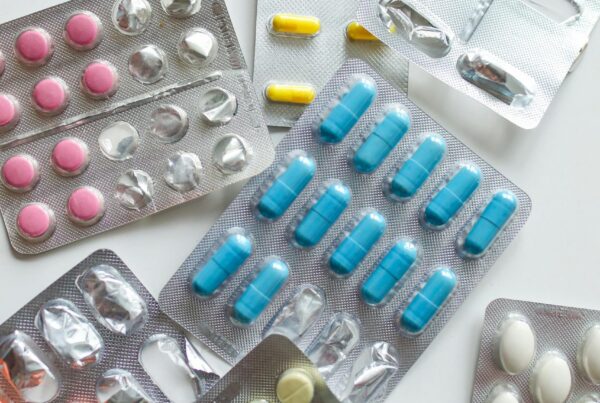
- The industry/water characteristics. Different industries will produce wastewater with unique characteristics, some of which can impact the alpha factor of an aeration system. Pharmaceutical companies often have high concentrations of salts and alcohols in their waste stream. The former can inhibit bubble coalescence, while the latter can enhance or depress it, depending on the aeration device chosen. Industrial waste with high levels of emulsified oil can depress alpha factors. The presence of soaps and detergents can lower the surface tension of liquids and have an adverse effect on oxygen transfer when using diffusers, which is common in the front end of long, plug flow aeration tanks used in sewage treatment. The ammonia levels in municipal wastewater can drive up biological oxygen demand, particularly in meat and poultry processing, protein plants, and leachates.