













Although essential to environmental and community health, the wastewater industry consumes incredible amounts of energy and is carbon intensive. Wastewater treatment plants (WWTPs) account for 4% of total energy consumption and 25% of the water sector’s energy use. In the U.S., for example, WWTPs generated 20 million metric tons (MMT) of CO2-equivalent in 2017.
A recent study finds that wastewater has the potential to be carbon neutral or even carbon negative. Researchers insist that wastewater contains approximately five times more embedded energy than is required for its treatment. This includes thermal energy (~80%), chemical energy (~20%), and hydraulic potential (<1%). It also contains valuable resources such as 16.6 MMT of nitrogen, 3 MMT of phosphorus, and 6.3 MMT of potassium annually worldwide. The study claims that capturing and digesting waste could generate 20 billjon m3 to 50 billion m3 of biogas, enough to provide clean cooking fuel to between 60 and 180 million households.
Authors of the study propose four crucial strategies to achieve net-zero carbon and energy sufficiency in the water sector:
- Improvement in process energy efficiency.
- Maximizing on-site renewable capacities and biogas upgrading.
- Harvesting energy from treated effluent.
- A new paradigm for decentralized water-energy supply units.
The report evaluates various technologies for recovering energy from wastewater. This includes anaerobic bioreactors, salinity gradient energy (SGE) recovery, and several types of fuel cells. The data shows that anaerobic bioreactors have the most potential for reducing carbon footprints in WWTPs. This mature technology is already heavily used to stabilize sludge and produce biogas, the latter of which can be harvested for combined heat and power (CHP). Co-digestion with high organic content substrates can lead to energy-positive facilities. Anaerobic membrane bioreactors (AnMBRs) offer advantages like improved effluent quality, low sludge production, compact size, and high biogas production, although this technology is not as prolific. Citing U.S. EPA data, the study projects that biogas alone could meet between 25% and 50% of a WWTP’s energy needs without changing processes.
While other technologies like salinity gradient energy (SGE) and various fuel cells (including microbial fuel cells, which boast significant environmental upsides compared to anaerobic digestion) show significant promise for the future and offer unique benefits, they are generally less mature. These technologies also face challenges such as lower power density, higher costs, or the need for further R&D to optimize their architecture, cost, and durability for widespread commercialization. Therefore, for immediate and widespread carbon footprint reduction in WWTPs, anaerobic bioreactors are the most viable option.
To maximize benefits in the water-energy nexus, the authors emphasize integrating wastewater treatment, water reuse, and resource recovery. Advanced water resource recovery facilities can decrease freshwater demand. Their ultimate vision is for WWTPs to become net energy producers and possibly carbon-negative facilities. However, they acknowledge there are still hurdles to overcome, particularly a lack of financial resource. Still, they argue that collaboration and investment are crucial to developing and deploying integrated wastewater technologies for a sustainable water future.
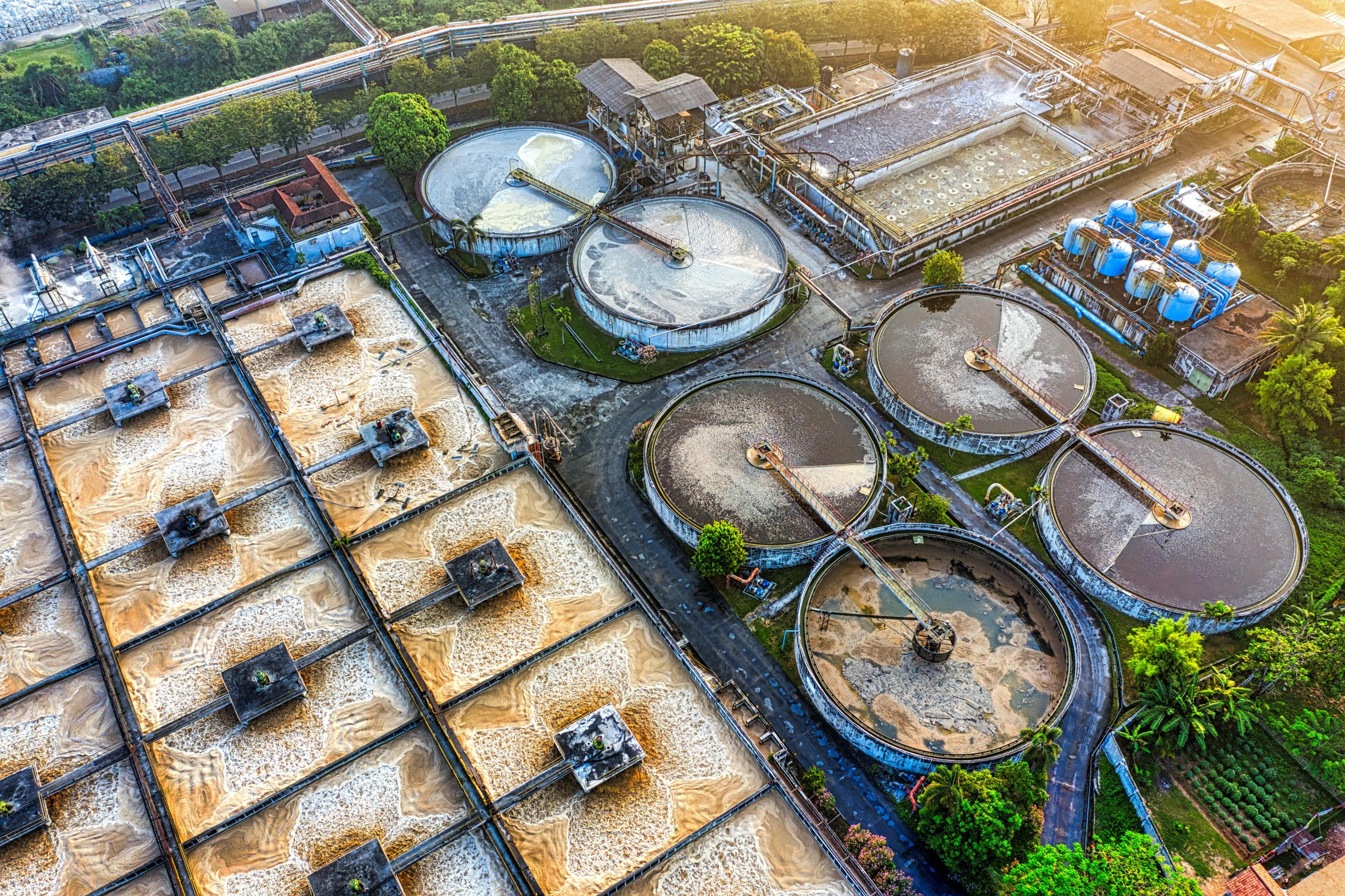
Featured Image Photo Credit: https://www.pexels.com/photo/aerial-view-of-green-trees-and-brown-concrete-building-5115946/