













Ridding The Oceans Of Plastic By 2040
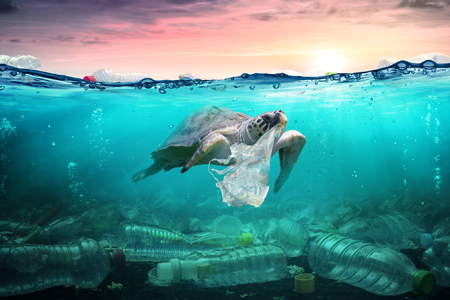
Last month, The Ocean Cleanup launched its first plastics cleanup system (System 001) in an area of the Pacific between Hawaii and California named the Great Pacific Garbage Patch. It constitutes the world’s largest accumulation zone, known as a gyre, of ocean plastics. Boyan Slat, CEO of The Ocean Cleanup, estimates that half of the Great Pacific Garbage Patch will be removed from the Ocean within five years as additional systems are applied until it achieves full-scale deployment.
Slat founded The Ocean Cleanup after a diving trip left him wondering why he’d seen more plastic in the Ocean than fish. Born of brazen teenage spirit (Slat was 16 at the time) and $2.2M in crowdfunding from 38,000 donors across 160 countries, The Ocean Cleanup has conducted a feasibility study, tested a scale model, utilized a prototype in the North Sea and completed an aerial expedition before launching the first system on September 8th 2018.
The system consists of a 600-meter-long floater that sits on the ocean surface with a tapered 3-meter-deep skirt drifting below. The floater provides buoyancy to the system and prevents plastic from flowing over it, while the skirt stops debris from escaping underneath. Algorithms are used to specify optimal deployment zones. The system uses the oceanographic flow elements of wind and wave to propel the system on the surface along faster than the debris below it, allowing the plastic to be captured.
Once concentrated, the plastic will be brought back to shore for recycling and the revenue gained will be used to fund the cleanup expansion to the other four ocean gyres.
Slat’s concept has received worldwide acclaim and several awards including the Champions of the Earth award from the United Nations in part because of its focus on cleaning up ocean plastics but also due to its earth-friendly approach to doing so. Using conventional methods, such as shipping vessels and nets, would take thousands of years, cost billions of dollars and apply a large carbon footprint. And yet by using ocean currents to accumulate the plastics rather than trying to round them up individually, The Ocean Cleanup believes it can make a far more significant dent in ocean plastics reduction for a fraction of the cost.
The Ocean Cleanup’s goals are ambitious. Combined with source reduction, it believes a deployment of fleets of its systems can remove 90 percent of ocean plastic by 2040.