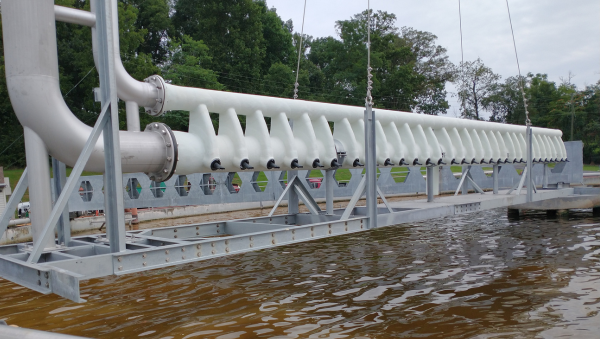















Most wastewater treatment plant (WWTP) professionals know that nitrous oxide (N₂O), also known as laughing gas, is released from tanks during nutrient removal processes. This potent greenhouse gas is produced by the organisms that clean the water. The exact amount of laughing gas emissions change throughout the day and year, peaking in colder seasons. For years, the reason for this variation has been unknown, which has made it difficult to control.
Recently, researchers working with Dutch Water Authorities believe they have come closer to an answer. According to a paper published in Nature Water, researchers spent two years studying the microbial communities and how plant operations affected emissions. Their findings indicated that laughing gas emissions are strongly linked to periods when nitrite builds up in the system.
Nitrite is an intermediate compound formed during the process of removing nitrogen from wastewater. It accumulates when the balance between the different types of nitrogen-removing bacteria is off, which can occur if the bacteria that convert ammonia into nitrite work faster than the bacteria that convert nitrite into nitrate.
In particular, the study identified the dissolved oxygen (DO) level as the main operational factor causing this bacterial imbalance and the resulting nitrite buildup. The seasonal pattern often starts with lower water temperatures, as colder temperatures slow down the activity of the bacteria responsible for nitrogen removal.
To prevent ammonia levels from rising when it gets cold, operators often increase the DO. However, this study suggests that doing so, particularly if done significantly, can selectively favor the ammonia-converting bacteria over the nitrite-converting bacteria. This throws off the balance and causes nitrite to accumulate.
With the excess nitrite present, the ammonia-converting bacteria can switch to a different process (called nitrifier denitrification) that produces laughing gas. The study found this is the primary way laughing gas is produced during these seasonal peaks.
The conclusion was that seasonal laughing gas peaks aren’t just caused by cold temperatures alone but by a chain of events where temperature changes trigger operational responses (like increasing DO) that create the specific microbial imbalance leading to nitrite buildup and emissions. More interestingly, the study suggests the solution might be simple and inexpensive, without needing big changes to the plant infrastructure. Instead, by adjusting DO levels more gradually — perhaps in anticipation of colder temperatures rather than just in response to ammonia buildup — operators might significantly reduce this imbalance and therefore emissions.
This strategy continues to be tested, but the initial results provide actionable insights for optimizing plant operation to help curb laughing gas emissions.
Featured Image Photo Credit: /http://Photo by Pixabay: https://www.pexels.com/photo/sad-clown-doll-in-basket-208087