








523
Company
11746
fa-lightbulb-on
About KLa
Discover our history in jet aeration, proven field performance across 38+ countries, and integrated approach to complex wastewater challenges.
11747
fa-droplet
IWS Companies
Explore our specialized family of brands delivering industry-leading aeration, filtration, and modular wastewater treatment technologies.
11750
fa-unicorn
Integrated Water Services
Founded in 2003, IWS is our parent company and turn-key provider of water and wastewater solutions across North America.
11748
fa-unicorn
Complete Filtration Resources
An industry leader in process filtration and industrial wastewater solutions, with deep expertise in the food and beverage industry—specifically in the dairy sector.
11749
fa-unicorn
Hi-Line Industries
Delivers high quality metal fabrications, special purpose equipment, custom machinery, and manufacturing services.
11751
fa-unicorn
M|MBR Systems
Industry-leading provider of replacement parts, retrofits, and modular systems to membrane bioreactor (MBR) customers.
11752
fa-unicorn
Tetrasolv
Tetrasolv Filtration, an industry leader in specialized filtration, separation, and mobile media services and rentals.
11753
fa-unicorn
AESINC
AESINC designs, engineers, and assembles reverse osmosis systems for seawater desalination, brackish water treatment, and high-purity water applications.
Founded in 2003, IWS is our parent company and turn-key provider of water and wastewater solutions across North America.
An industry leader in process filtration and industrial wastewater solutions, with deep expertise in the food and beverage industry—specifically in the dairy sector.
Delivers high quality metal fabrications, special purpose equipment, custom machinery, and manufacturing services.
Industry-leading provider of replacement parts, retrofits, and modular systems to membrane bioreactor (MBR) customers.
Tetrasolv Filtration, an industry leader in specialized filtration, separation, and mobile media services and rentals.
AESINC designs, engineers, and assembles reverse osmosis systems for seawater desalination, brackish water treatment, and high-purity water applications.
aside column

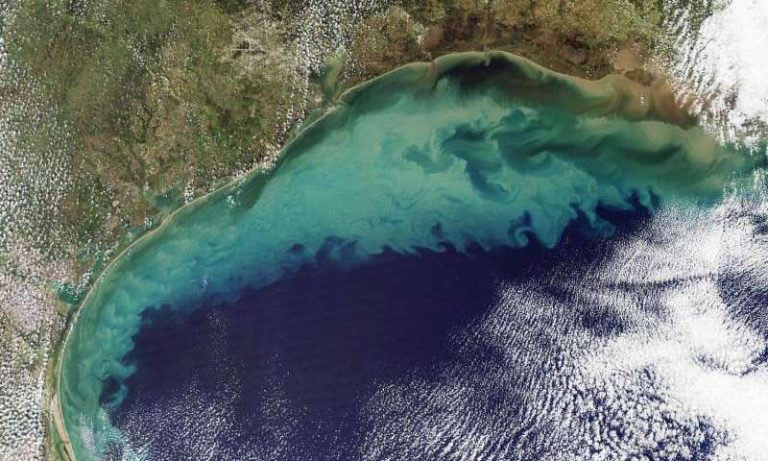
Last year, the National Oceanic and Atmospheric Administration (NOAA) recorded the largest hypoxic zone in the Gulf of Mexico since monitoring began 32 years ago. Hypoxic waters, often referred to as dead zones, have dissolved oxygen concentrations of less than 2-3 ppm. They are caused by eutrophication or excess nutrients that promote algal growth in water bodies. As algae decompose, they consume oxygen creating dead zones.

Measuring 8,776 square miles (roughly the size of New Jersey), this area of low-to-no oxygen negatively impacts aquatic life in the Gulf. Marine organisms avoid or become physiologically stressed in waters below 2mg/L. These zones can also kill fish and other marine life which cannot escape the low-oxygen water, affecting commercial harvests and the health of impacted ecosystems.

There are a number of organizations focused on monitoring and ultimately attempting to reduce the size of the dead zone. NOAA’s Gulf of Mexico Hypoxia Watch is a cooperative project between the National Marine Fisheries Service (NMFS), the National Coastal Data Development Center (NCDDC), and the CoastWatch – Caribbean/Gulf of Mexico – Regional Node. The objective of Hypoxia Watch is to develop near-real time data and map products using shipboard measurements of bottom-dissolved oxygen.
Image credit: Jeff Schmaltz (NASA Earth Observatory) [Public domain], via Wikimedia Commons

The Mississippi River/Gulf of Mexico Hypoxia Task Force (HTF) includes many federal and state agencies working together to manage excessive nutrient pollution which causes the dead zone. Its goal is to reduce the areal extent of the Gulf of Mexico hypoxic zone to less than 5,000 kilometers. The timeframe for achieving this goal was modified in its 2008 Action Plan from 2015 to 2035. HTF’s interim target is to achieve a 20 percent nutrient load reduction by 2025.There are a number of organizations focused on monitoring and ultimately attempting to reduce the size of the dead zone. NOAA’s Gulf of Mexico Hypoxia Watch is a cooperative project between the National Marine Fisheries Service (NMFS), the National Coastal Data Development Center (NCDDC), and the CoastWatch – Caribbean/Gulf of Mexico – Regional Node. The objective of Hypoxia Watch is to develop near-real time data and map products using shipboard measurements of bottom-dissolved oxygen.

Interestingly, the report suggests that the sources of nitrogen and total phosphorus entering the Gulf of Mexico are:

  • 60 percent agricultural impacts with farm fertilizers contributing 41 percent of the amount
  • 26 percent atmospheric deposition
  • 7 percent urban area run off and
  • 7 percent wastewater treatment plants

In its latest biennial report to Congress, published in 2017, the HTF cited a number of success stories including the monitoring and reduction of nutrients leaving many point source treatment facilities. But you can see from the percentages above that the real burden lies in nutrient abatement with non-point sources.

Last year’s large hypoxic zone was caused by heavy stream flows, which were 34 percent above the long-term average and carried higher-than-average nutrient loads. The USGS estimated that 165,000 metric tons of nitrate — about 2,800 train cars of fertilizer — and 22,600 metric tons of phosphorus flowed down the Mississippi and Atchafalaya rivers into the Gulf of Mexico in May.

Regardless, the long-term effort to reduce the dead zone remains a struggle. And it’s a costly one at that. The National Academy of Sciences has calculated that if agricultural conservation investments could be targeted to the most cost-effective locations, a combined federal, state, local and private investment of $2.7 billion per year could effectively reduce the size of the Gulf of Mexico’s hypoxic zone.