













As the 2022 Beijing Winter Olympics reaches its conclusion, it may not be best remembered for its opening ceremony, international comradery or fierce competition. Rather, the event’s source water impact could be its most significant legacy.
“China’s plans of artificial snowfall at the 2022 Beijing Winter Olympics pose a threat to the environment and could result in environmental damage,” according to Republic World. “Putting artificial snow in a place that does not have any natural snow at all, could put a lot of water into a place where the soil is not expecting it.”
While any lasting environmental damage caused by China’s reliance on 100% artificial snow for these games is yet to be seen, it is already clear that massive amounts of energy and water have been consumed at a time when both resources are growing more scarce and the environment at large is struggling to keep up with demand.
“We expect that when you are creating that much snow, the energy usage is extraordinary,” explained Madeleine Orr, a sports ecologist at Loughborough University, per Republic World. “The amount of water is extraordinary. In this Olympics, we’re expecting 49 million gallons of water to be used — and that is if things go well.”
But, in an attempt to ease environmental concerns, Chinese officials have argued that their historic use of artificial snow is less harmful than many may fear.
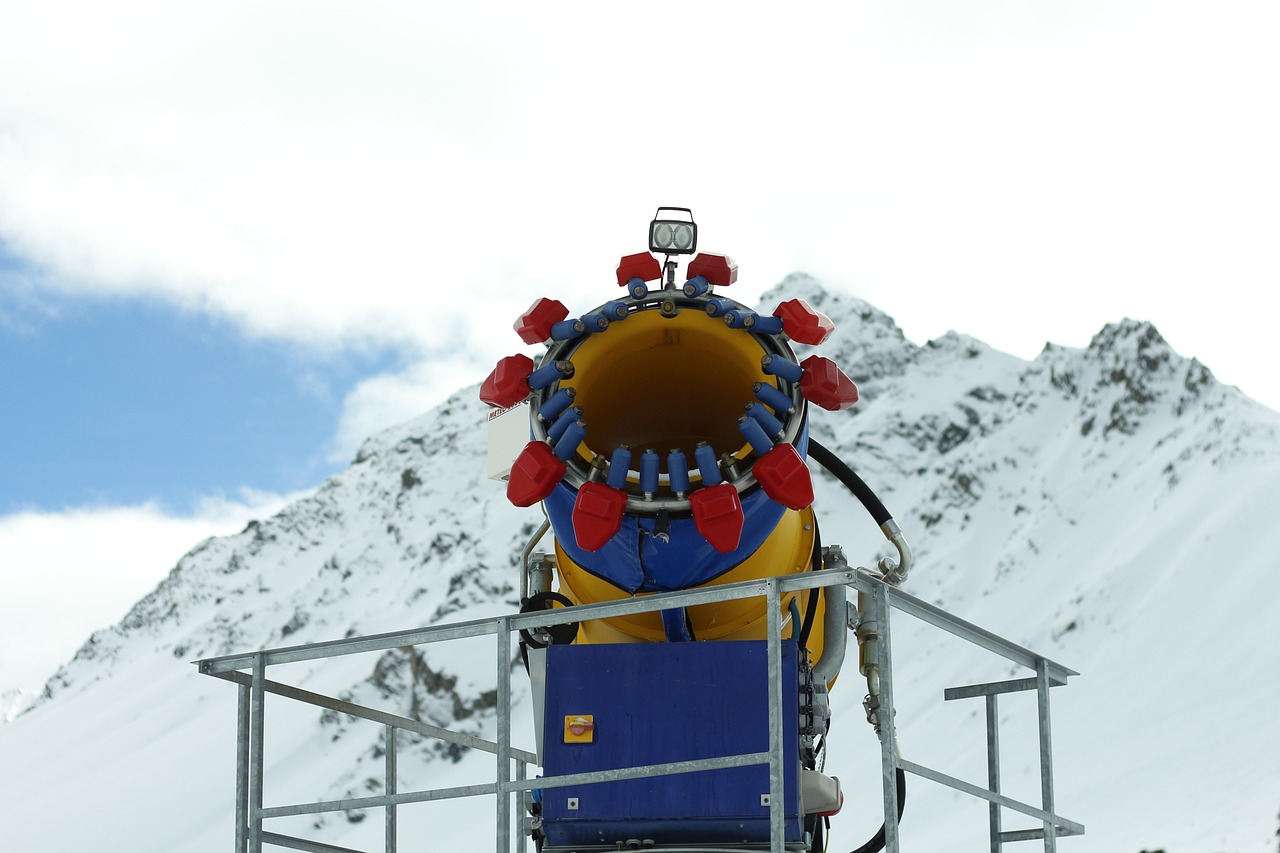
“The snow-making equipment at Beijing 2022 has used 100% renewable energy since the beginning of snow production, [a Chinese] official said,” according to Market Watch. “Snow farming is also used, which involves preserving and storing snow ahead of the busy season, a standard practice at global ski resorts. The IOC [International Olympic Committee] also said that no chemicals were used to make the Olympic snow.”
The Winter Olympic Games have increasingly relied on artificial snow for years, and while the Beijing Games are the first to completely rely on it, it almost certainly won’t be the last. Ultimately, the environmental impact of this practice is still unknown, but it is certainly putting more strain on source water supplies.
“Even if powered by renewables, a huge amount of energy is needed, which is both costly and can be a significant drain on water resources,” Market Watch concluded.
Featured Image Credit: https://pixabay.com/photos/snow-cannon-winter-snow-piste-3222927/