














Our modern society generates around 460 million metric tons of plastic waste each year, with around 20 million ending up in the environment, particularly water bodies. Plastics take decades to decompose, with some types requiring hundreds of years. Even worse, as they do break down, they form microplastics, which end up being consumed by wildlife and ultimately people.
The presence of microplastics in water bodies has been a pervasive issue for many years. While biodegradable plastics like PLA are nothing new, they break down in water similarly to oil-based plastics. More recently, researchers have developed new types of plastic that decompose in a matter of days, if not hours. Scientists from the RIKEN Center for Emergent Matter Science and the University of Tokyo recently demonstrated a plastic that will dissolve in seawater within one to two hours, leaving no leftover residue. Researchers also claimed the new material can be efficiently recycled. Moreover, when placed on soil, it will break down into nitrogen and phosphorus, which act as natural fertilizers.
Instead of ethanol from corn, the RIKEN team used supramolecular plastics, which are held together by reversible interactions. Two ionic monomers are combined to form cross-linked salt bridges, which researchers say provide strength and flexibility. In early tests, one of the monomers was sodium hexametaphosphate, a common food additive and a component in toothpaste.
According to project lead Takuzo Aida, the team was able to generate plastics with different levels of hardnesses and tensile strengths, all comparable or better than conventional plastics. As a result, the new type of plastic can be customized for a given application, such as hard, scratch-resistant plastics or rubber silicone-like plastics. “With this new material, we have created a new family of plastics that are strong, stable, recyclable, can serve multiple functions, and importantly, do not generate microplastics,” he said. Aida also claimed the material is non-toxic, non-flammable, and does not emit carbon dioxide.
For now, there are no plans to commercialize the substance, but Aida told Reuters their research has drawn the attention of several business sectors, including the packaging industry.
RIKEN’s new plastic isn’t the only attempt to make practical material that doesn’t generate microplastics in water. Researchers at Northeastern University created a material called MECHS, which stands for Mechanical Engineered Living Materials with Compostability, Healability and Scalability. It is made from a combination of E. coli bacteria and a fiber matrix, which breaks down more quickly than other biodegradable plastics. Unlike the plastic made by Aida’s team, MECHS can be produced at scale using a process similar to paper manufacturing, although it is unclear if it has generated the same level of commercial interest.
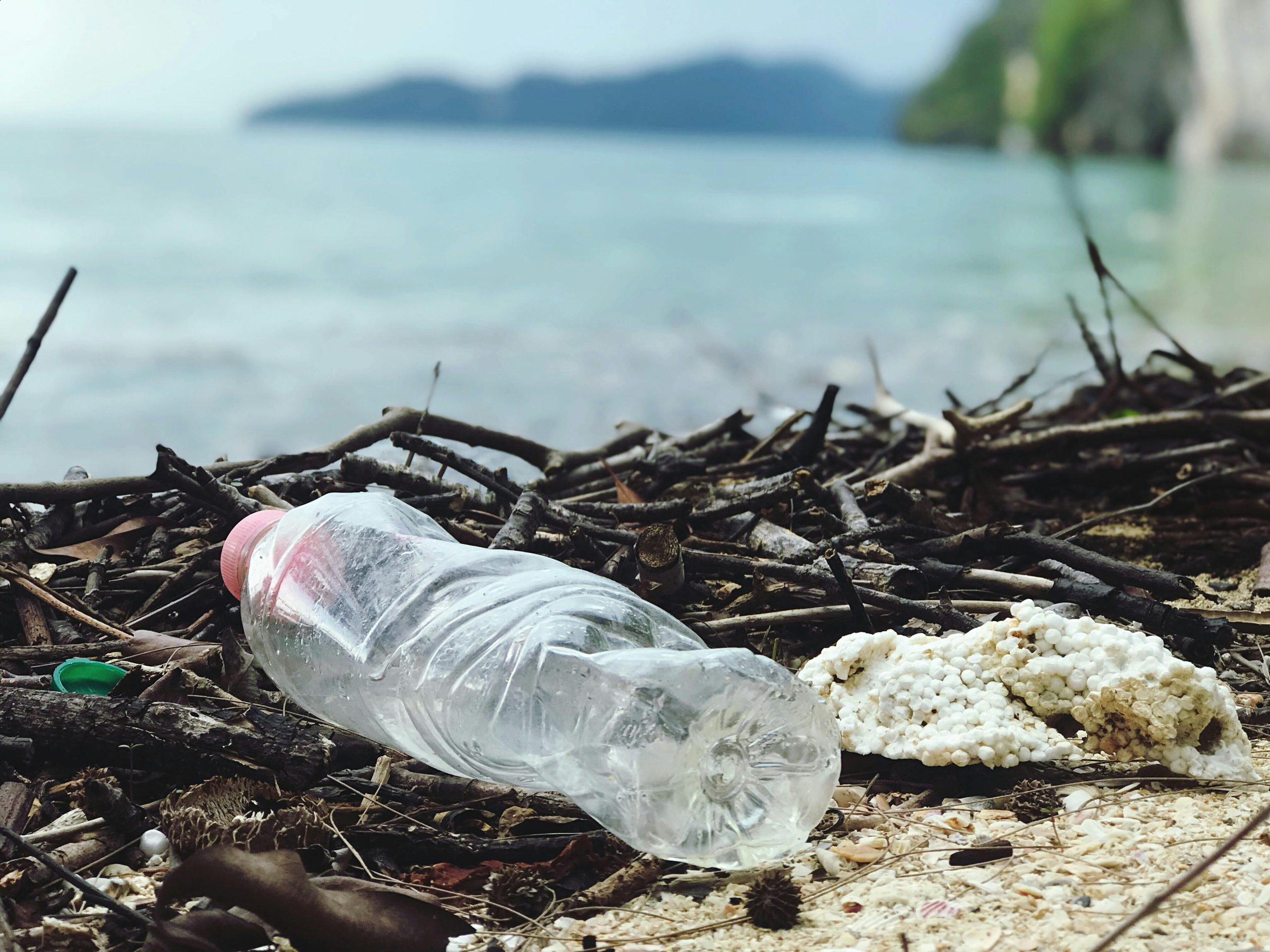
Featured Image Credit by Catherine Shelia: https://www.pexels.com/photo/close-up-photo-of-plastic-bottle-2409022/