











Back in the late 1980’s when market drivers created the cost-effective option of using above-ground circular tanks for industrial activated sludge processes, there were some early valuable lessons for both aeration equipment manufacturers and plant operators.
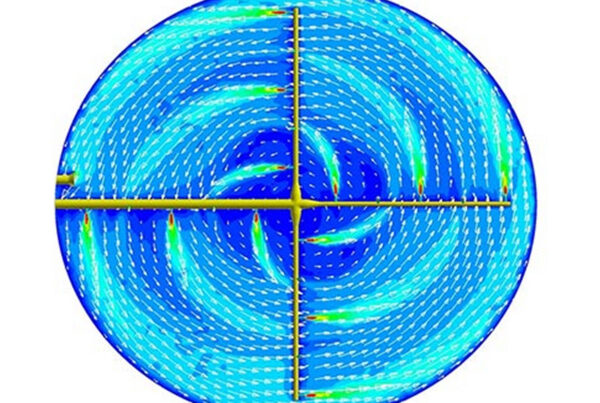
As production plants got away from the in-ground basins, one of the more simple innate operational checks became more challenging: that being the view of the aeration basin water surface. For years, a plant operator could simply look at the basin from across a parking lot or out a window , s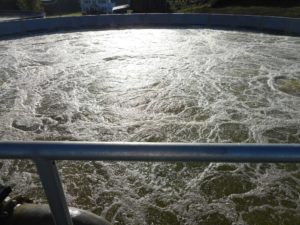 ee the surface aeration pattern, and be able to do the “eyeball check”. By performing this simple task, they would have a good idea if their biological process was healthy and the aeration system was operating satisfactorily. This check could not help with any long-term trends, but with little or no feedback from any type of sensor or laboratory analysis, one would know if things were okay at that time. With their own eyes an operator could assess the color of the biology, presence of foam or oily substances, look for any abnormalities in the surface pattern of a submerged aeration system, or if they had surface aerators to be certain that the machines were secure and in-place with the correct spray pattern.
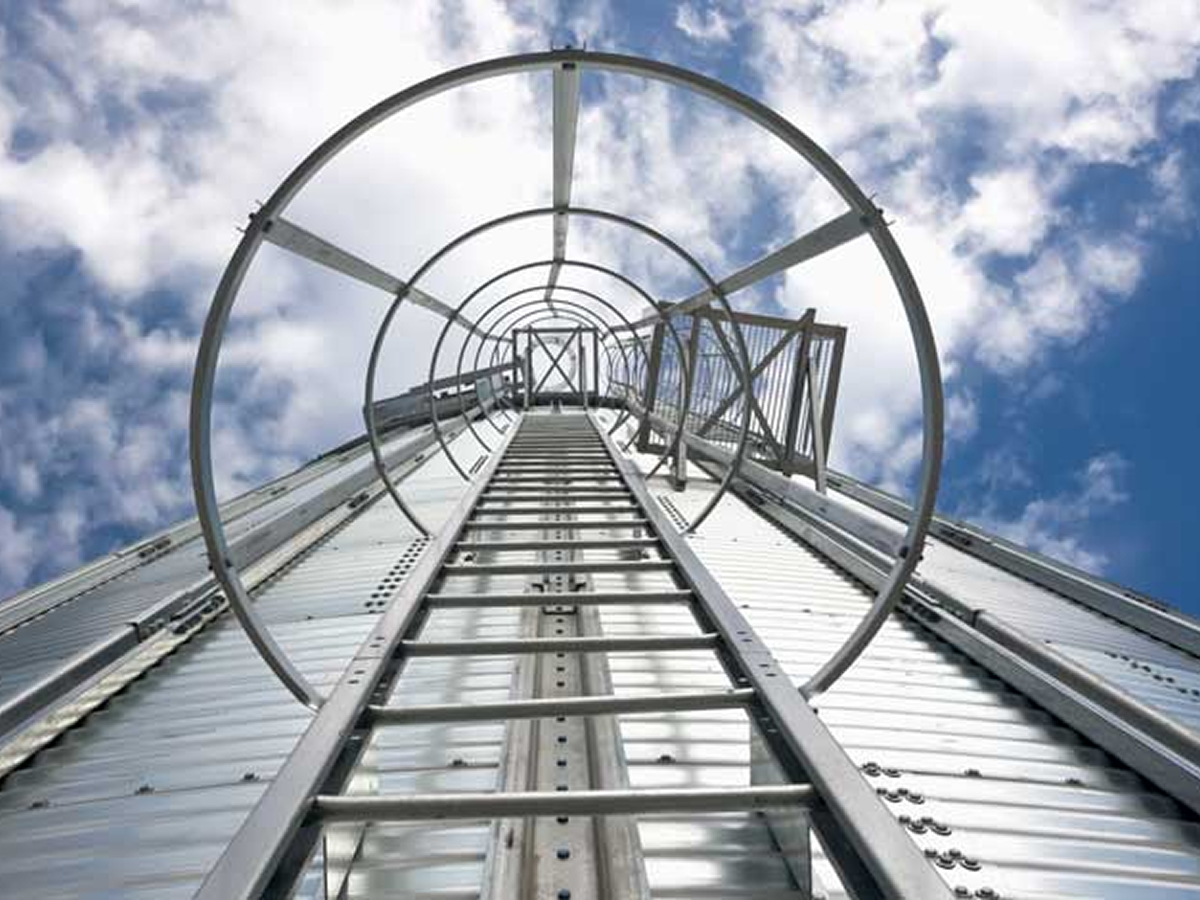
Fast forward to the early 1990’s and some of our first experiences with 20 to 30 ft. high above-ground tanks and the only way to check the surface aeration pattern was to climb a tank ladder (with OSHA cage) up to the top and have a peek.
Needless to say, although the surface pattern check was still performed, it was now a chore and there were significantly less trips to the ladder as time went on, thus taking away one of the simplest operational checks.
The obvious 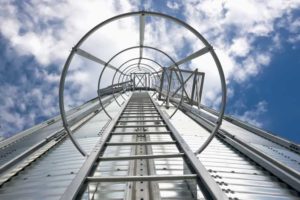 solution to this problem was to get away from the ladders and use proper stairways with top platforms for viewing, sampling, valve access, etc. Although more expensive then the ladder option, stairs made getting to the top of the tank much less of a chore. From an engineering and operational perspective it was widely viewed that any operator worth their salt, would make a habit of going to the top at least once or twice a day and preferably be the first task at the beginning of a shift.
Now it’s 2017 and in a global economy, our experiences in other countries and cultures is that tank ladders are still very much in existence even in developed countries like the UK and Spain for example. However, over the last 25 years the technology exists such that the climb to the top need not be so important if industry makes investments.
On any incoming communication regarding a perceived issue with the aeration system, our instinct today is not to immediately send a field-service representative to site. Our first request to any customer i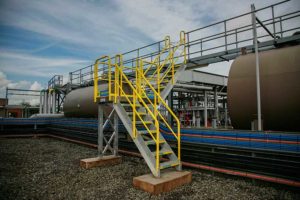 s all about the “eyeball test” and although we prefer video with audio, a series of photos may be all we need to develop a trouble shooting plan or even resolve the issue rapidly.