













As local breweries grow in popularity, their initial focus on hand-crafted recipes can quickly shift to business realities such as the costs and logistics of process wastewater treatment. Publicly owned treatment works (POT Ws), brewery owners, and consulting engineers all have roles to play in making that trajectory smoother for up-and-coming craft and microbrewers.
In the U.S., the challenge has blossomed over the past decade. According to statistics from the Brewers’ Association For Small & Independent Craft Brewers, the market has experienced a 500 percent increase in total brewpub, microbrewery, taproom, and regional craft brewing operations — with microbreweries alone growing from 505 to 2,058 locations — in that time frame.
Understanding The Challenges Of Wastewater Treatment
With brewery wastewater being much more challenging in terms of sugar, solids, alcohol, and pH as compared to municipal wastewater, POTWs can quickly see the impact of growing specialty brewing operations in their service areas. And with up to 7 gallons of water being required for every gallon of beer produced – with 70 percent of that water going down the wastewater drain – the total volume to be treated grows exponentially as output increases.
The strength of that wastewater is measured as biochemical oxygen demand (BOD) — the volume of oxygen required to help aerobic microbes consume the biological/chemical content in the wastewater. Measured in milligrams per liter, municipal wastewater BOD typically ranges from 150 to 300 mg/L, while the BOD of untreated brewery process wastewater can exceed 3,000 mg/L. The sheer BOD loads in surges of wastewater can upset POTW operations. At some point, POTWs typically put heavy surcharges on high volumes of extreme- BOD brewery wastewater discharges.
Fundamental Strategies For Addressing Wastewater Demands
These fact sheets on wastewater disposal guidance, solid waste guidance, and industrial pretreatment programs for breweries, distilleries, and wineries offer good examples of what growing microbreweries need to know about wastewater disposal. Going one step further, this industry specialist proposes that breweries focus not only on mechanisms for treatment but also on making wastewater management an integral part of their business culture. Options for growing breweries can range from paying the increased fees for municipal wastewater treatment, to investing in their own pretreatment steps, to actually recycling some of their treated wastewater to conserve potable water use.
Know The Challenges Up Front.
Some POTWs might limit the BOD load that can be transferred to the public collection system at any point in time or by a cumulative amount for the day. Others might add a surcharge when the daily, weekly, or monthly BOD discharge exceeds a certain load. The best approach for all parties is to address the issue before major treatment problems arise.
Plan For The Future.
Even if a craft or microbrewery is going to discharge directly to a municipal sewer line at first, its high-BOD process-water drains should be run in lines separate from low- BOD sanitary sewer water from sinks, toilets, kitchens, etc. That will make it easier to monitor those volumes separately and isolate onsite process-wastewater treatment at a future date.
Understand The Basics Of Wastewater Treatment.
Just like brewing, onsite wastewater treatment involves knowledge of biology, chemistry, and physics. BOD and total suspended solids (TSS) are the biggest challenges. If space is a concern, a deeper equalization tank or aeration basin can be used to accommodate a larger volume of water in a smaller footprint and to provide added capacity as a margin for error in the event of pump or power failure.
Consider The Bigger Picture.
Depending on the size of the operation, local costs, and other conditions, any brewery that does choose to treat wastewater onsite might consider adding an aerobic process called a membrane bioreactor (MBR) to enable them to reuse the refined effluent.
Tactics For Dealing With Brewery Wastewater
From the initial operation of a small microbrewery, there are steps that can be taken to minimize BOD stress on the local POTW — from how to handle the raw flow all the way up through various levels and combinations of onsite treatment. As operations grow and trucking wastewater away or discharging to municipal sewers becomes more expensive, other options might arise:
Reducing Up-Front Loads.
Not all components of a microbrewery’s wastewater flow are equally challenging in terms of treatment. Addressing selective aspects of a facility’s process and washdown wastewater can offer more affordable approaches at different phases of a brewery’s growth.
Solids Removal.
When properly handled and removed in a timely manner, spent grain can have enough value to be repurposed for animal feed or food byproducts without having to cover transportation costs.
Side-Streaming.
Diverting the most concentrated, high- BOD components for special handling can go a long way toward reducing the load on the POTW facility. Collecting and trucking away just a small proportion of total flow— those sources with the highest BOD content — can result in significant reductions to BOD and treatment costs for the remaining volume of water going to the POTW. Candidate materials include bottom-of-the-tank residues, washdown water, returned beer, and residual beer in pipes or hoses after transfers. Properly collected and handled, side-streamed materials can be applied to agricultural soils as a practical soil amendment for local farmers.
Load Equalization.
Up to a certain volume, storing large batches of process or washdown wastewater in a flow equalization tank can let the brewery trickle that BOD load into the POTW collection system at manageable levels. That might be done as a continuously metered feed or scheduled for off-hours release to prevent overstressing POTW capacity. Even though this approach does not use full aerobic treatment to reduce BOD, using jet aerators or slot injectors to circulate tank contents with some aerationis a common solution and can help to minimize potential odor problems.

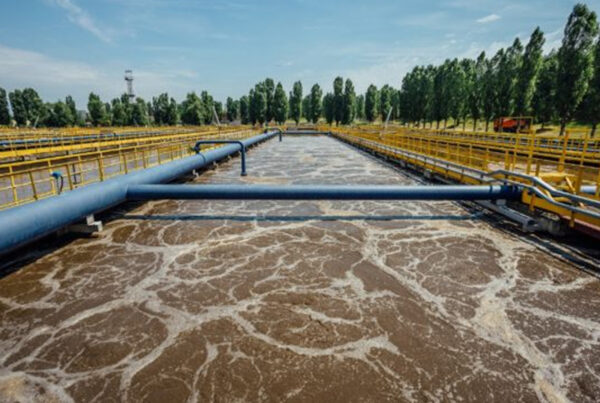
Figure 1. This system designed for use in an MBR application, shows the slot injectors angled down for good mixing from the bottom of the tank up and to create a longer path for its bubbles to be exposed to the water for better oxygen transfer.
Pretreatment.
Once operations expand to the point that the load volume and concentration get too expensive or impractical to rely exclusively on disposal to the local POTW, growing microbreweries might consider onsite pretreatment to reduce BOD to acceptable levels before discharge. A good option is a jet aeration system that supports growth of BOD-consuming aerobic microbes and allows for throttling back on aeration costs when the BOD demand is low — saving energy without the risk of clogged diffusers. Slot injectors— a special type of jet aeration nozzle — can also accommodate variable frequency drives (VFDs) on the liquid pumps to further conserve energy for recirculating the treatment tank contents when the oxygen demand is lower.
Recycling Where Practical.
For midsize brewery operations that choose to treat wastewater fully onsite, the addition of an MBR process might be practical for recycling treated wastewater for washdown, non-contact cooling water, or graywater uses to reduce potable water demands and costs
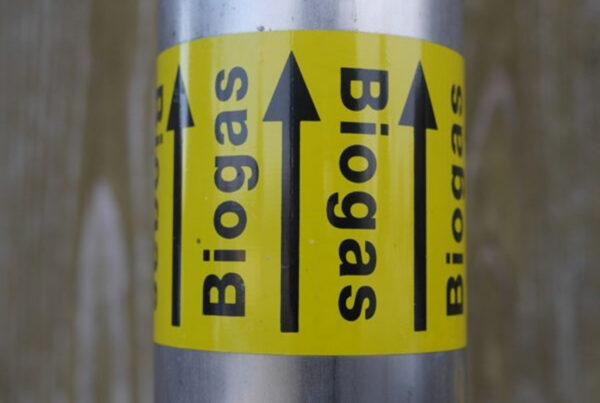
(Figure 1). Larger brewers might even choose anaerobic wastewater treatment systems to generate biogas that can be used to reduce energy costs, but those solutions do not scale well economically for craft or microbreweries.